Resetting the demand engine at a full-service shipping & logistics provider.
- A full-service shipping and transportation provider had grown well, but their demand-generation motion had drifted into spreadsheet-driven activity with opaque attribution and slow handoff to sales.
- We deployed three AI agents over two quarters to reset the engine — Pipeline Hygiene, Content Engine, Account Engagement.
- Outcome: +30% UKI pipeline over two quarters, with marketing-to-sales handoff time cut from days to hours and a board-ready attribution view that the CRO could finally trust.
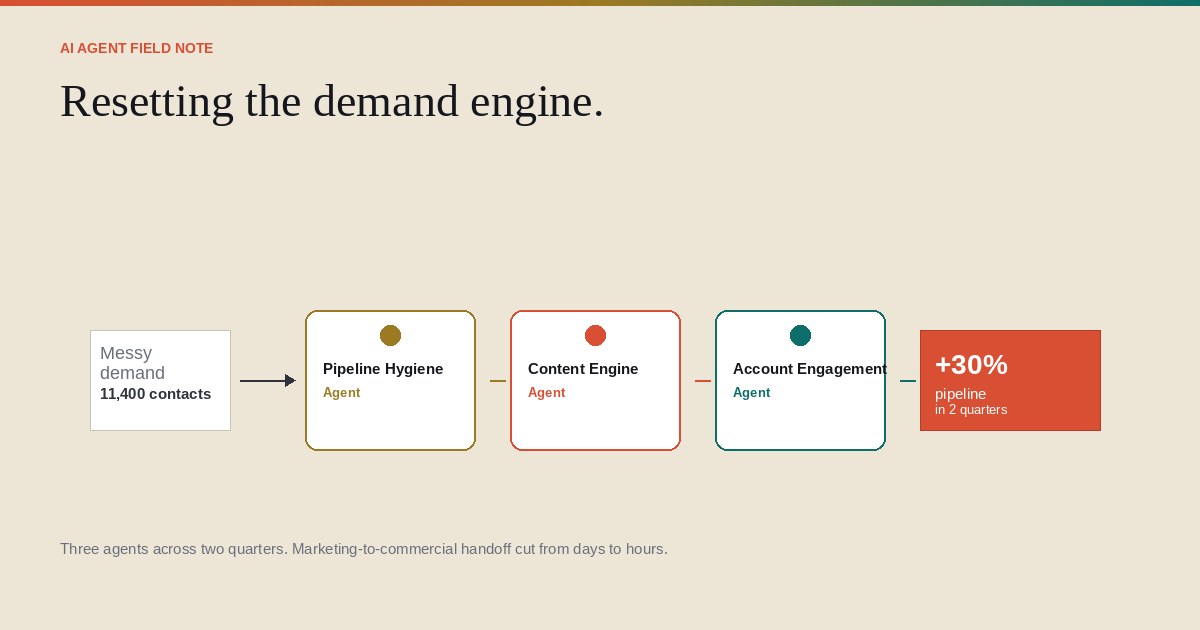
Three agents resetting the demand engine across two quarters.
Fourth in our AI Agent Field Notes series. This one’s the demand-engine version — not a single campaign or event, but a six-month engagement to fix the underlying machinery. Anonymised client, paraphrased numbers.
The brief.
The company is a full-service shipping and logistics provider — not a software vendor. They move freight for enterprise customers across road, ocean and air, alongside warehousing and value-added services. Established in the UK and Ireland market, with respectable annual growth and a strong customer book. The problem wasn’t demand — it was that demand had become hard to read.
The CRO described it well in the first conversation: “I have a sales team that’s working hard and a marketing team that’s working hard, and pipeline is growing, but I cannot tell you which channels are paying back, which content is doing the heavy lifting, or which accounts marketing has actually warmed up before sales gets to them. So we keep funding everything and hoping.”
What he wanted was an honest reset of the demand-generation operation. Not new tactics. The fundamentals: clean data, traceable attribution, and a marketing-to-sales handoff that didn’t lose warm prospects in the gap between teams. The brief was nominally six months, with a board review at the end of Q2 that would decide whether to expand the team or restructure it.
The three agents we put in.
This is a different kind of engagement from the campaign-led work we usually write about — a structural intervention rather than a sprint. The agents had to live alongside the in-house demand-gen team for two full quarters, not just a campaign window.
Pipeline Hygiene Agent
The first month was almost entirely this agent’s work. Cleaned the CRM — deduplicated 11,400 contact records into 8,200 unique people, enriched missing job titles and seniority, fixed broken account hierarchies (the same logistics group sometimes existed under three different parent records). Scored every active opportunity against a clear ICP definition. Wrote a one-line summary of where each opportunity sat and what should happen next, refreshed weekly. The CRO got a Monday-morning pipeline view he could actually defend in front of his CEO.
Content Engine Agent
The previous content motion was a freelance writer producing two blog posts a month and a marketing automation tool blasting them out. Volume was acceptable; relevance was poor. The agent listened to actual customer calls (with consent), read the win/loss notes, watched the questions prospects asked on the discovery calls. Drafted weekly content pieces grounded in real buyer questions: how heads of supply chain evaluate logistics partners, what manufacturers ask about service-level commitments, which capacity and resilience concerns shape decisions at procurement. Two pieces a week, in the voice of named subject-matter experts on the team, reviewed and signed off by them.
Account Engagement Agent
By month two, with the data clean and the content engine producing relevant material, this agent took over the named-account outreach motion. 280 named accounts across UKI — large retailers, manufacturers, distributors and brand owners with meaningful inbound and outbound freight volumes. Personalised outreach in the relevant BDM’s voice, sequenced with content the prospect had actually engaged with, routed warm replies straight into commercial-team diaries. The BDM team went from spending 60% of their time researching and drafting to spending 60% of their time on conversations.
What changed.
The pipeline number is the headline; the operational changes underneath are what made it possible:
The CRO got a pipeline number he could defend. Before this engagement, the weekly pipeline review involved three dashboards, two spreadsheets and a conversation about which numbers were stale. After three months, there was one Monday view, refreshed every Friday afternoon. The CRO could walk into a Tuesday CEO check-in and answer any pipeline question off one screen. That sounds small. It compounds enormously: senior leadership stops second-guessing the demand engine and starts directing it.
The commercial team finally felt their content marketing was helping them. Pre-engagement, BDMs treated marketing-sourced leads with active suspicion — not enough qualification, often the wrong job title, sometimes the wrong company. After the Content Engine and Pipeline Hygiene agents had been working in concert for a quarter, BDMs were citing specific articles and webinars in their outreach because they could see prospects had engaged with them. The cultural shift — commercial trusting marketing-sourced demand — was as valuable as the pipeline lift itself.
Marketing-to-sales handoff stopped leaking. Pre-engagement, a marketing-qualified lead would sit in a queue for 36–72 hours before a BDM picked it up, by which time the prospect had often moved on or stopped engaging. With the Account Engagement Agent triaging inbound and the Pipeline Hygiene Agent flagging the right accounts in real time, the average handoff time dropped to about three hours. Same commercial team, same number of leads, far fewer leaks.
The hardest demand-generation problems aren’t about generating demand. They’re about not losing the demand you already have: bad data, slow handoffs, irrelevant content, opaque attribution. Agents fix that boring infrastructure work persistently, week after week.
What it took to keep running.
1. Two quarters of patience.
The first six weeks of this engagement looked like nothing was happening. The Pipeline Hygiene Agent was deduplicating data, which is invisible from outside. The Content Engine Agent was tuning to the customer-call source material, which produced fewer pieces than the previous freelance writer was producing. Pipeline didn’t move in week six. We told the CRO this would happen. We told him again in week eight when his board started asking. The compounding effect didn’t become visible until week ten or so. Anyone running this kind of structural reset has to be willing to look slow for two months before they look fast.
2. A senior demand-gen lead who would actually own the changes.
The Director of Demand Gen on the customer side spent roughly a day a week working alongside the agents. Without that ownership the work would have stalled the moment a sales leader pushed back on the new pipeline view or a content piece felt off-brand. Senior accountability is the unfussy thing that distinguishes deployments that compound from deployments that fizzle.
3. The honest conversation about what the legacy tools were doing.
Two of the previously-purchased marketing tools became redundant once the agents were in place. The CMO had been the one who’d championed those purchases. We held off on the “you don’t need this anymore” conversation until we had three months of data showing the agents were doing the job better. That conversation went well in month four, but it would have gone badly in month one.
Would we do it again?
Yes — and the team has expanded the engagement into year two with two changes worth flagging:
Add a Signal Agent at the start, not as an extension. The original three agents were the right starting set, but if we’d had a Signal Agent watching for ICP-fit triggers (new logistics director appointments, new ERP rollout announcements, public modernisation programme RFPs) from week one, the Account Engagement Agent would have had a richer signal-to-cold-outreach mix throughout. We added one in Q3.
Add a Reporting Agent for the board view. By the end of Q2, the CRO was asking for cross-quarter pattern recognition that the Pipeline Hygiene Agent could provide on demand but couldn’t package as a board-ready narrative. The Reporting Agent took over that summarisation job in Q3 and freed the demand-gen Director’s Friday afternoons.
What this would look like for your organisation.
The structural-reset version of this engagement is a fit for any B2B revenue operation where:
- Pipeline is growing but attribution is murky — you can’t cleanly say which campaigns or channels are paying back
- Marketing and the commercial team are working hard but mistrust each other’s lead quality and follow-through
- The CRM is messy enough that pipeline reviews involve more “is this number current?” than “what should we do about it?”
- Content marketing is producing volume but not relevance, and the commercial team isn’t using any of it in real conversations
- Marketing-to-commercial handoffs leak warm prospects, and nobody can quite see where
- You operate in a service-led industry — logistics, professional services, manufacturing — where the long-cycle relationship matters more than a one-off transaction
The decision being asked of a CRO here isn’t “should I hire more demand-gen people?” — that’s the wrong frame. More headcount on a broken engine just makes the engine louder. The decision is “can three agents working alongside one good demand-gen director do the structural plumbing work that an additional five hires couldn’t?” Our experience: yes, and the difference compounds further every quarter you run them.
Demand engine that needs a reset?
If your pipeline is growing but you can’t read it, your handoffs are leaking, or your content motion isn’t showing up in sales conversations — we’ll walk through which agents would do the structural work, what your team would still own, and what to expect over two quarters. No deck, no pitch.
Get every field note in your inbox.
Industry-tailored briefings on AI agents, written for revenue leaders. One short note a week. No spam, unsubscribe in one click.
We’ll just ask for your name and company on the next step.